Pools & water Australia
How Much Does It Cost to Run a Pool Pump?
Pool-pump costs depend on electrical input, running time and the price of electricity. A lower-speed schedule can change those costs, but it must still provide the circulation and filtration your pool needs.
- Last checked
- 15 October 2026
- Rates as of
- 1 July 2026
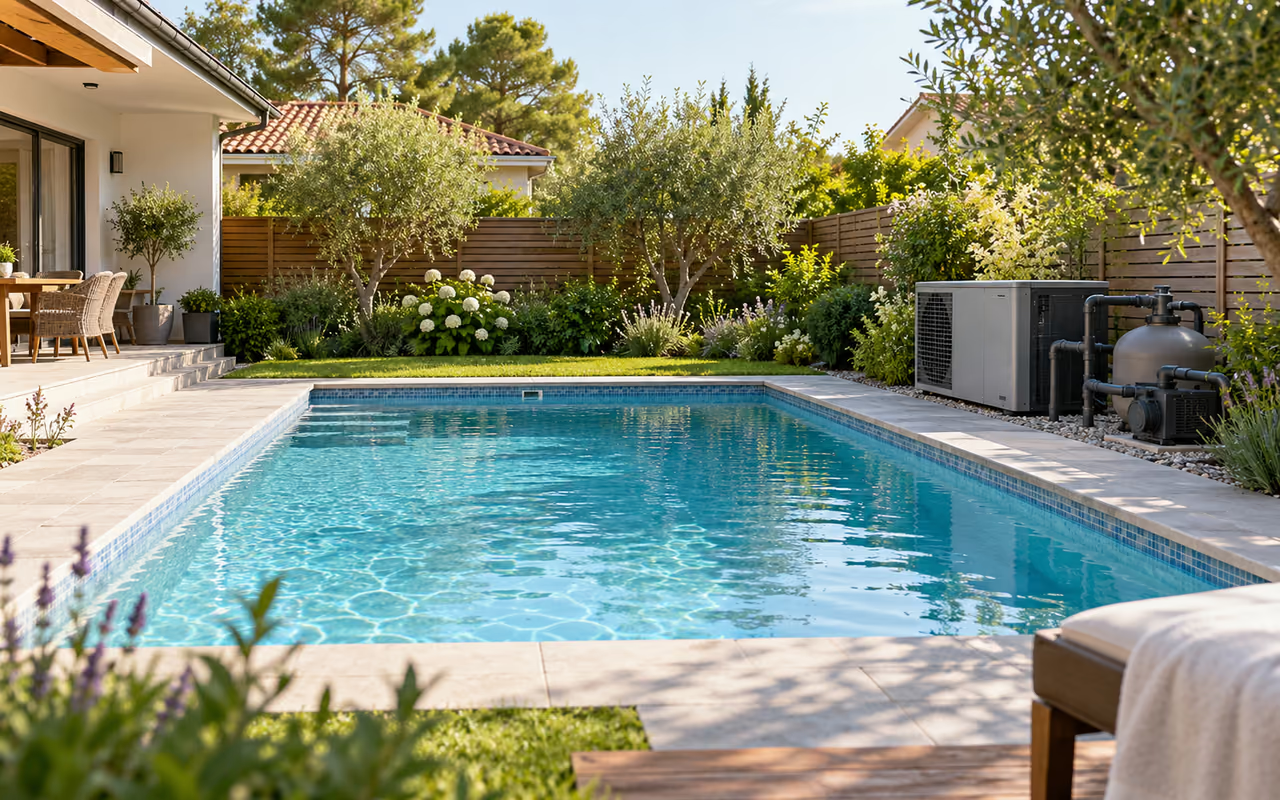
Start with electrical input
Use the pump's electrical input watts at the operating speed. Motor horsepower or a hydraulic output figure is not the electricity drawn from the supply. If the label or product sheet does not make the distinction clear, ask the supplier for the correct input data or obtain a suitable measurement.
The basic calculation is watts divided by 1,000, multiplied by hours to give kWh. Multiply kWh by dollars per kWh to price the schedule. Our tool accepts separate speed periods so a variable-speed pump does not have to be represented as one full-power load. The entered values still need to describe the actual installation.
Hourly, eight-hour and twelve-hour scenarios
The table uses an explicitly entered 1,000 W pump. It therefore consumes 1 kWh each running hour, 8 kWh in eight hours and 12 kWh in twelve hours. Those durations are arithmetic comparisons, not recommended filtration schedules. They do not establish how long your pool can safely run without circulation.
Prices are stored 2026-27 flat residential default-offer usage references for named networks. They include GST and exclude supply charges. A state contains different networks and offers, so the rows are not statewide average bills. Where your network or plan is not covered, enter the price on your bill rather than choosing a nearby region.
| Network | 8 hours/day | 12 hours/day |
|---|---|---|
| NSW Ausgrid, 33.1372c/kWh | $2.65 | $3.98 |
| SEQ Energex, 27.9744c/kWh | $2.24 | $3.36 |
| SA Power Networks, 41.9103c/kWh | $3.35 | $5.03 |
| Victoria CitiPower, 25.96c/kWh | $2.08 | $3.12 |
Single speed and variable speed
Our original schedule comparison enters 1,000 W for eight hours for the single-speed case. The alternative enters 200 W for six hours and 800 W for two hours, totalling 2.8 kWh per day instead of 8 kWh. At the Ausgrid reference of 33.1372 cents/kWh, the daily costs are about AUD 2.65 and AUD 0.93.
This demonstrates energy arithmetic only. It does not show equal circulation, adequate filtration or a real product's speed-to-power curve. Government guidance supports using suitable variable speeds and checking operation with the supplier. Obtain matching flow, system and operating evidence before treating a schedule difference as an achievable equipment saving.
How long should a pump run?
The appropriate schedule depends on the pool, equipment, conditions and maintenance needs. Ask the supplier or pool professional to confirm the required circulation and any minimum operation for connected equipment. A timer can maintain a confirmed schedule; it cannot determine the schedule merely from an electricity price.
Check filters, baskets and the equipment instructions as part of maintenance. If you shorten runtime, confirm that the pool still meets its operating requirements. Avoid applying a universal hours-per-day rule from a running-cost article. The cost calculator needs a valid schedule as an input and does not assess water quality or hydraulic performance.
Running during solar hours
Solar generation can reduce purchased electricity when surplus output is available at the same time as pump use. It also has an opportunity cost if electricity would otherwise be exported for a credit. Compare avoided imports against that lost export value, rather than automatically pricing solar electricity at zero.
Keep total required circulation consistent when comparing schedules. If solar output is insufficient during part of the period, price the remaining imports at the relevant tariff. Cloudy days, seasonal generation and other household loads can change the surplus. The solar-timer calculator can help test entered scenarios without promising a particular home's future generation.
Seasonal cost and the monthly convention
At six operating months, the pump tool uses 365 multiplied by six divided by twelve, or 182.5 operating days. The illustrated single-speed schedule then costs AUD 483.80 at the Ausgrid reference, while the entered variable-speed schedule costs AUD 169.33. These are annual operating totals for the specified season.
Use actual operating days or a consistent season assumption when comparing alternatives. Do not multiply a full-year total by the seasonal fraction twice. Electricity supply charges, purchase, repairs and installation are separate unless they actually change as part of the decision. A payback estimate needs the additional installed price and a supported saving.
Build a useful pump estimate
Collect the electrical input for each speed, daily hours, operating season and tariff. If electricity prices vary through the day, use the actual time bands and energy allocation. A flat-price average cannot represent a time-of-use schedule accurately when the mix changes between the alternatives.
Save the assumptions and check that both schedules are operationally suitable before comparing cost. The calculator can preserve the arithmetic, but it cannot certify circulation or select equipment. Discuss the result with a pool professional if the proposed schedule, filtration or connected heater requirements are uncertain.
Frequently asked questions
Sources
- AER: Default Market Offer 2026-27, Appendix CChecked on 15 October 2026
- ESC: Victorian Default Offer 2026-27, stored determinationChecked on 12 October 2026
- Australian Government: pool pumpsChecked on 15 October 2026
- Australian Government: solar self-consumptionChecked on 15 October 2026
Keep reading
A little more context.
Hot Tub and Spa Running Costs in Australia
Estimate Australian spa running costs using measured energy, network references and separate records for changing seasonal conditions.
Publish date:
Read blog
How Much Electricity Does an Electric Blanket Use?
Calculate electric blanket kWh and Australian nightly costs, compare a stated room-heating input and follow official product safety guidance.
Publish date:
Read blog
Is a Solar Battery Worth It in Australia?
Assess Australian battery savings from delivered energy, charging losses, export prices and confirmed quotes, without assuming capacity equals savings.
Publish date:
Read blog