Electric vehicles United Kingdom
How Much Does It Cost to Charge an Electric Car?
The cost of charging an electric car depends on the energy bought at the meter and the prices paid for that energy. Start with distance and efficiency, include charging losses, then separate home and public charging.
- Last checked
- 15 October 2026
- Rates as of
- 1 October 2026
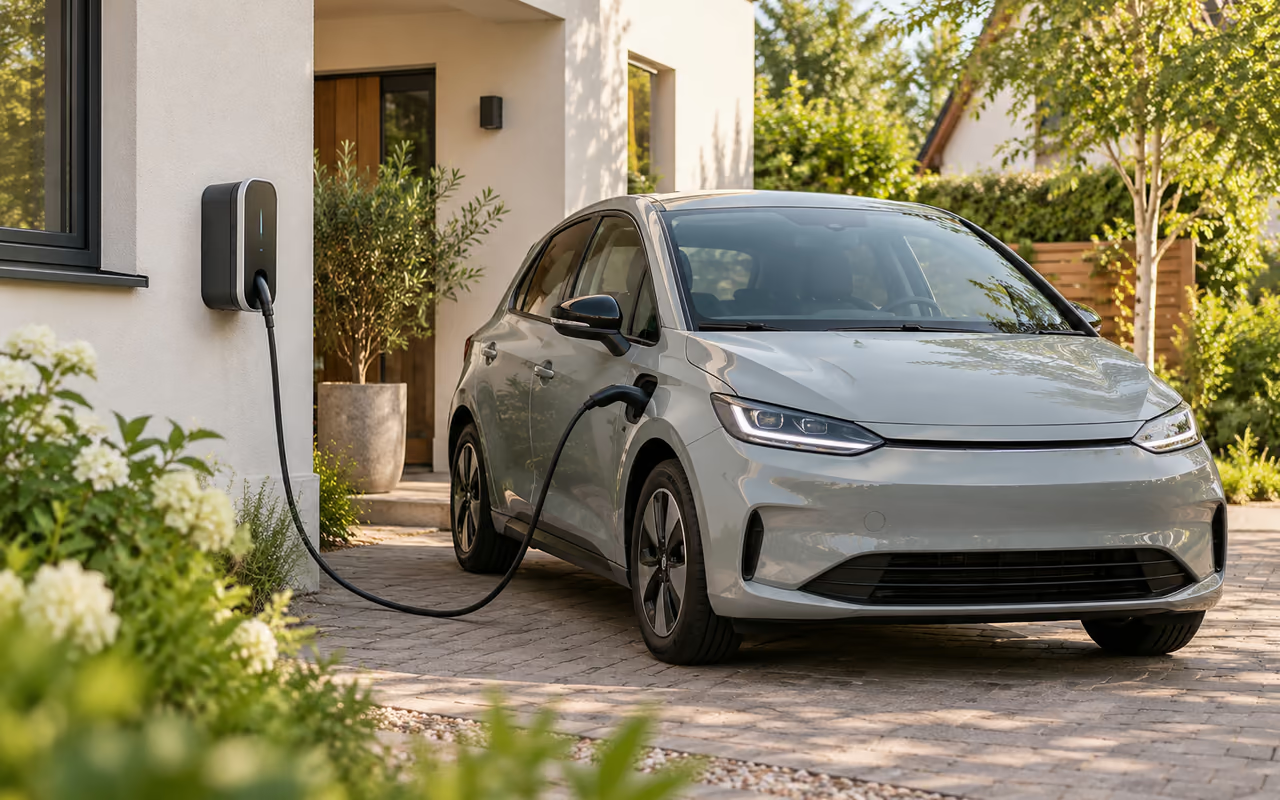
Charging at home on the cap reference
Our worked example uses an entered efficiency of four miles per battery kWh. A 200-mile journey therefore needs 50 kWh at the battery. If charging losses are 10% of purchased energy, metered electricity is 50 divided by 0.90, or about 55.56 kWh. That distinction matters: battery use is not necessarily the energy billed.
At the stored October to December 2026 GB Direct Debit reference of 26.32p/kWh, the calculated home-charging energy costs £14.62. This dated reference is not every customer's tariff and does not establish a future cap price. Use the applicable region, payment method and bill price for a personal estimate.
What an off-peak tariff changes
A lower overnight price can reduce the charging cost when the required energy actually fits in the cheaper window. The supplier's day price, standing charge, eligibility and control conditions still matter to the household. Do not compare an attractive night rate on one plan with all other costs held at an unrelated plan's prices.
The illustrative off-peak input here is 10p/kWh, giving £5.56 for the same purchased energy if every charging kWh receives that price. It is an explicit calculation assumption, not an available supplier offer. If only part of the energy charges overnight, split the home energy between the actual applicable periods.
Public rapid prices are inputs
Public charging should use the operator's actual terms for the session. Per-kWh prices, session charges, parking and other applicable fees can have different boundaries. A price displayed for one location or membership should not become a national average or a promise for another journey.
The illustrative public energy input in our comparison is 75p/kWh. At that price alone, the same 55.56 purchased kWh cost £41.67. The figure excludes separate fees and is not a surveyed public charging price. Keep public energy and fees distinct so the estimate explains what has actually been included.
A 200-mile worked comparison
The table holds the journey, battery efficiency and loss definition constant. Its final row uses 80% home charging and 20% public charging. Within the home portion, half receives the illustrative 10p off-peak input and half the dated 26.32p reference. The calculator gives £16.40 for the journey under that combination.
The percentages are scenario choices, not a recommended charging habit. A household with no driveway, a different vehicle or regular long-distance travel can have a different mix. Changing the mix changes the weighted energy price; it does not change the stated journey's battery demand in this particular comparison.
| Charging scenario | Energy cost |
|---|---|
| All home at dated 26.32p reference | £14.62 |
| All at illustrative 10p off-peak input | £5.56 |
| All at illustrative 75p public input | £41.67 |
| 80% home with half off-peak, 20% public | £16.40 |
Understand charging losses
Check whether a vehicle or charging record measures battery energy or purchased energy. A home meter reading already includes losses within its measurement boundary. Adding the same losses again would overstate energy. Conversely, using a battery-only figure without any allowance can understate purchased energy.
A loss fraction defined against purchased energy needs division by one minus that fraction. A percentage defined against battery energy is a different input convention. Use the definition supported by the evidence you have, and retain it with the estimate. The calculator's example does not supply a universal loss value for every charging condition.
Turn a trip cost into a monthly estimate
For a representative month, enter the distance actually expected and a charging mix that can realistically serve it. Avoid taking a favourable single journey and multiplying it across a year of different driving conditions. If the annual calculation assumes constant efficiency and prices, describe it as that scenario rather than a forecast.
The supporting calculator also provides an annual operating estimate. It excludes vehicle purchase, finance, insurance, servicing and charger installation. Existing household supply charges are not newly incurred for every session. Any charge genuinely caused by a change of plan or installation belongs in the wider comparison on a consistent basis.
Build your own estimate
Collect a supported vehicle consumption figure, charging records where available, and the home and public prices that apply to your routine. Check the proportion of home energy that can use the off-peak window. Keep the price dates and session conditions with the result so it can be recalculated when a plan changes.
Use the estimate to compare valid charging routines and identify the inputs that matter most. It does not assess a socket, circuit or charger installation. Follow the equipment and installation requirements and obtain suitable professional advice for electrical work. A low calculated energy cost does not establish that an improvised charging arrangement is suitable.
Frequently asked questions
Sources
- Ofgem: October to December 2026 capChecked on 15 October 2026
- UK Government: public chargepoint price informationChecked on 15 October 2026
Keep reading
A little more context.
EV Charging Tariffs: Off-Peak vs Price Cap Rates
Compare EV off-peak and standard charging prices per mile, then check whether the whole household benefits from a different tariff.
Publish date:
Read blog
What Is the Energy Price Cap and How Is It Set?
Understand what the energy price cap covers, how Ofgem sets it and why a typical annual figure is not a limit on your household bill.
Publish date:
Read blog
How Much Does It Cost to Run a Hot Tub in the UK?
Estimate UK hot-tub running costs from measured electricity, compare seasonal records fairly and separate warm-up from ongoing operation.
Publish date:
Read blog