Heating at home United Kingdom
Are Oil Filled Radiators Cheap to Run?
Oil-filled radiators can be useful for heating an occupied space, but the oil does not make the electricity free. Compare input power, actual heating-on time and the heat you need before deciding that one heater is cheaper.
- Last checked
- 15 October 2026
- Rates as of
- 1 October 2026
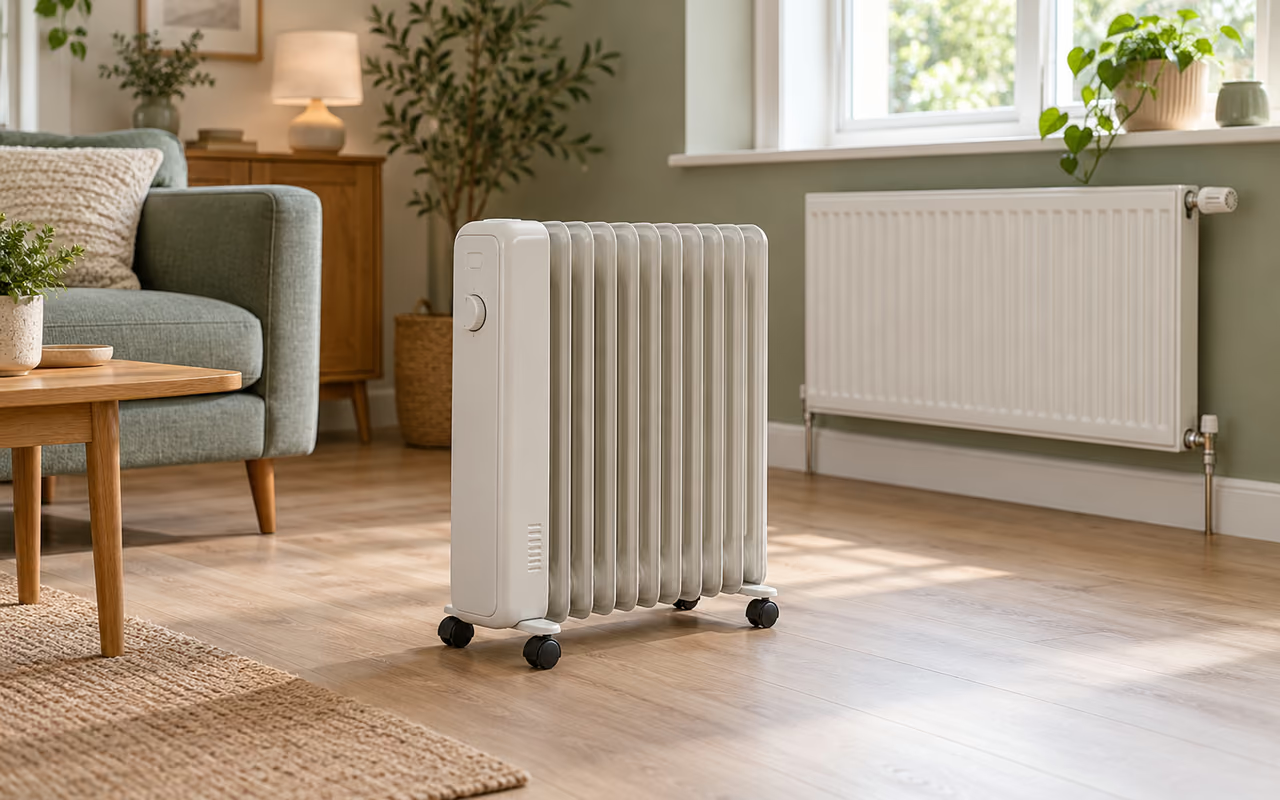
How an oil-filled radiator uses electricity
An electric element warms the fluid inside the radiator and the casing releases heat into the room. The fluid stores and spreads heat; it is not a fuel that provides extra energy. Dimplex's direct-acting heating explanation describes the conversion of electricity into heat at the point of use.
Different control arrangements can change when heat is delivered. A slower warm-up and lingering warmth after switch-off are features of heat storage, not evidence of free running time. For the bill, follow purchased electricity over a useful period. If the radiator is metered, its measured kWh can avoid guessing how often the thermostat energises the element.
Cost per hour and thermostat cycling
The worked scenario uses a 2,000 W radiator whose element is on for half of a three-hour occupied period. That is an average 1 kW input and 3 kWh of electricity for the day. At the stored 26.32p/kWh reference price, the calculated daily cost is £0.7896 before display rounding.
The thermostat share is an entered assumption, not a measured typical value for every room. It changes with heat loss, target temperature and starting conditions. The comparison table shows how the arithmetic changes at the same rated input. It does not tell you which setting a particular radiator will achieve.
| Heating-on share | Energy in 3 hours | Cost in 3 hours |
|---|---|---|
| 25% | 1.5 kWh | £0.39 |
| 50% | 3 kWh | £0.79 |
| 100% | 6 kWh | £1.58 |
One room versus central heating
Heating one occupied room can require less total energy than heating several rooms, but the two options need the same clearly defined task before their costs can be compared. Closing doors, central controls, pipe losses and heat reaching other rooms can all alter what service is actually provided. Our calculator does not allocate a whole home's bill automatically to one room.
In the entered room scenario, compare 3 kWh of useful heat with gas heating at 90% efficiency. At the illustrative calculation boundary, gas energy is about 3.33 kWh. With the stored 7.97p/kWh gas reference, its variable fuel cost is about £0.27. Existing fixed charges are separate from that additional heating decision.
When central heating can win
The cheaper purchased unit does not decide the whole question, but it is part of it. A gas system serving the occupied room effectively can have a lower variable cost for the same useful heat under the example assumptions. A poorly controlled whole-home schedule may buy more heat than that room needs.
Use actual zoning and demand evidence rather than declaring either option universally cheapest. If several rooms need heat, add their requirements consistently. A portable heater estimate is not a property heating design and cannot demonstrate that unheated areas will remain suitable. Ask an installer about distribution or control problems instead of relying on a fixed percentage of the gas bill.
Safety basics for portable heaters
Follow the manufacturer instructions and London Fire Brigade guidance. Keep heaters clear of furniture, curtains and other combustible materials, and never use a portable heater to dry clothing. Consider where a heater will stand before buying or moving it, including leads and how people move around the room.
A cost saving never makes an unsafe arrangement acceptable. Let a heater cool before moving it and act on damaged equipment or suspect connections. The linked official guidance provides the safety basis; this blog post does not assess your room, socket, circuit or appliance. A qualified electrician should address concerns about the electrical supply.
How to collect a better estimate
Record rated input, occupied hours and either measured kWh or a supported heating-on share. Keep the price from the same bill period. If a plug-in meter is used, check that it is suitable for the appliance load and follow its instructions. Do not improvise an electrical arrangement just to collect data.
Measure across a representative heating period. A short reading while the radiator warms from cold may not represent later cycling, and a mild afternoon may not represent a cold evening. Note those conditions alongside the result so the number retains its meaning when you compare another day or another heater.
Make the comparison useful
Start by stating the service: one occupied room for a stated period, or a whole home on a stated schedule. Then keep the same useful heat or explain why the services differ. Our calculator can show both entered costs, but the comparison is only as sound as that boundary.
Treat the result as an operating estimate at the selected prices. Equipment purchase, installation, maintenance and future prices need separate consideration. If the radiator appears inexpensive only because the entered central-heating demand is much larger, inspect that assumption before drawing a conclusion about the efficiency of the two systems.
Frequently asked questions
Sources
- Ofgem: October to December 2026 capChecked on 15 October 2026
- Dimplex: direct-acting electric heatingChecked on 15 October 2026
- London Fire Brigade: portable heatersChecked on 15 October 2026
Keep reading
A little more context.

What Is the Energy Price Cap and How Is It Set?
Understand what the energy price cap covers, how Ofgem sets it and why a typical annual figure is not a limit on your household bill.
Publish date:
Read blog
How Much Does It Cost to Run a Hot Tub in the UK?
Estimate UK hot-tub running costs from measured electricity, compare seasonal records fairly and separate warm-up from ongoing operation.
Publish date:
Read blog
Solar Panel Payback in the UK: How Long Does It Take?
Estimate UK solar payback using documented yield, direct use, export income and quotes, with clearly labelled PVGIS location scenarios.
Publish date:
Read blog