Electric vehicles Canada
How Much Does It Cost to Charge an EV in Ontario?
Charging an EV in Ontario costs the metered electricity needed for the journey, priced under the plan and time window you actually use. Compare the added EV cost and the whole household separately before choosing a plan.
- Last checked
- October 26, 2026
- Rates as of
- November 1, 2026
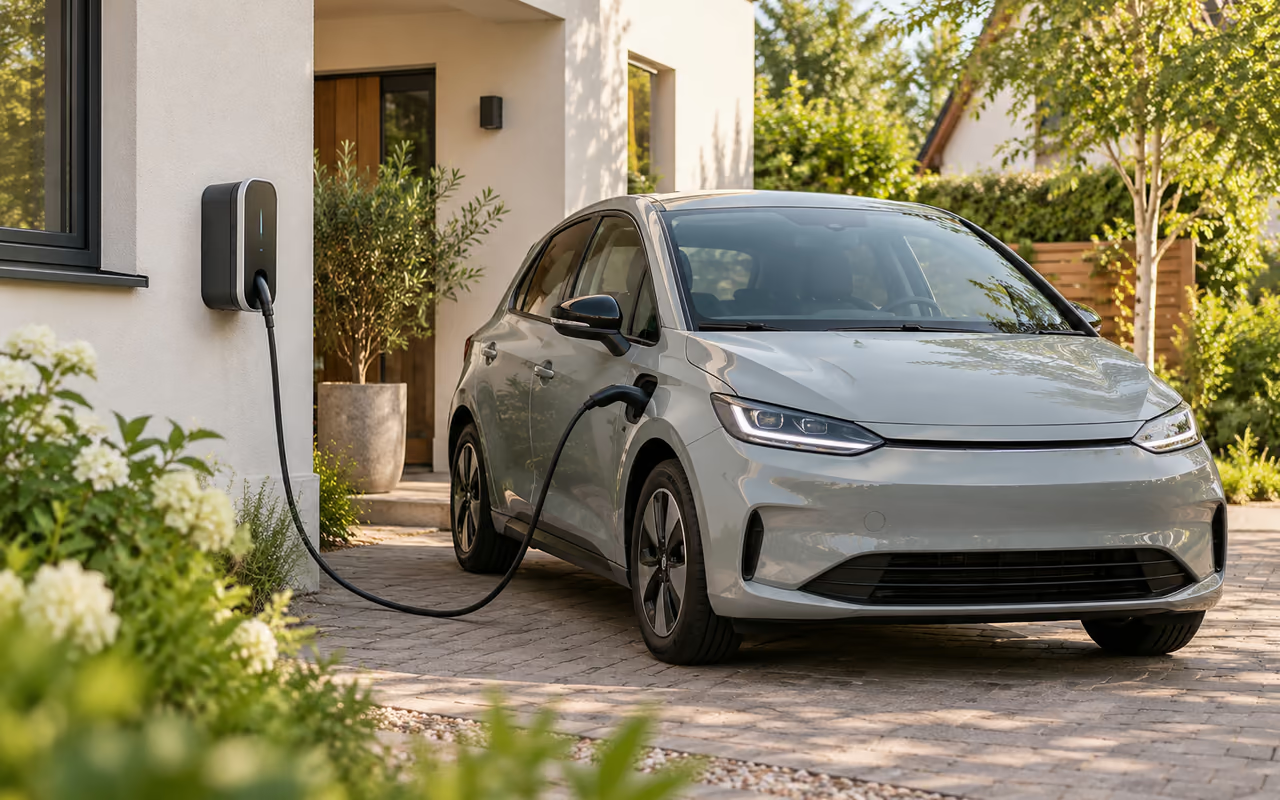
Cost per 100 km on home plans
Start with battery consumption in kWh per 100 km. If an energy figure already represents metered charging electricity, do not add charging losses again. If it represents battery energy, convert it to purchased energy using a documented loss basis. The distinction affects every cost that follows.
Our original example uses 18 battery kWh per 100 km and a 10% loss fraction of purchased energy. Metered energy is therefore 18 divided by 0.90, or 20 kWh per 100 km. The example assumes all charging happens overnight. It does not claim that every vehicle or charger has those consumption and loss figures.
A dated plan comparison
The table uses the stored OEB snapshot covering 1 November 2026 to 31 October 2027. TOU overnight is priced at 9.1 cents/kWh and ULO overnight at 3.7 cents/kWh. The tiered example prices the added EV energy marginally against the household profile rather than treating every charging kWh as first-tier energy.
The resulting costs are CAD 1.82, CAD 0.74 and CAD 2.64 per 100 km for this scenario. They cover the electricity line only, excluding delivery, regulatory charges, loss adjustment, tax and rebates. Use the applicable current prices for a later decision, retaining the same loss and energy boundary when comparing another period.
| Cost basis | TOU | ULO | Tiered |
|---|---|---|---|
| Per 100 km | $1.82 | $0.74 | $2.64 |
| Added EV per average month | $22.75 | $9.25 | $33.00 |
| Household plus EV per month | $105.48 | $113.74 | $113.40 |
TOU
- Per 100 km
- $1.82
- Added EV per average month
- $22.75
- Household plus EV per month
- $105.48
ULO
- Per 100 km
- $0.74
- Added EV per average month
- $9.25
- Household plus EV per month
- $113.74
Tiered
- Per 100 km
- $2.64
- Added EV per average month
- $33.00
- Household plus EV per month
- $113.40
The monthly worked example
Annual driving of 15,000 km at the entered consumption and losses requires 3,000 metered kWh. Dividing by twelve gives 250 kWh in an average month. The existing household uses 700 kWh in the representative summer month, with the same common time-window profile on all three plans.
Added monthly EV electricity-line costs are CAD 22.75 on TOU, CAD 9.25 on ULO and CAD 33.00 on tiered. Combined with the household, totals become CAD 105.48, CAD 113.74 and CAD 113.40. The lowest EV cost alone therefore does not select the lowest combined plan in this example.
Charging losses and the measurement boundary
Loss percentages can be defined in different ways. Here the loss is a fraction of purchased energy, so dividing battery energy by one minus that fraction gives metered energy. Simply adding ten percent to battery kWh would represent a different calculation. Keep the documented definition with the input.
A vehicle trip display, charging-session record and electricity meter can describe different boundaries. Choose the figure appropriate to the estimate and avoid mixing them. Weather, driving and charging conditions can change actual consumption. The calculator does not infer those changes or supply a universal charger-efficiency default for every installation.
Home versus public charging
Public charging can include a per-kWh price, session or time charges and other applicable fees. Obtain the actual operator terms for the location and session rather than treating an old headline as a provincial average. The Ontario supporting tool compares home plans; it does not model a public charging network or automatically include parking charges.
For a mixed routine, separate home and public energy, apply the relevant prices and add only fees that apply to each portion. Keep the energy boundary consistent so losses are not counted twice. A public charging example remains an entered scenario until its operator price and conditions are verified.
Whole-home timing and practical limits
Check whether the required charging energy can fit inside the intended window given the vehicle, charger and available time. The lowest price is not useful if the schedule cannot deliver the energy needed. A session crossing a boundary must be split correctly rather than assigning its entire energy to the cheap period.
Other household loads remain important. ULO's weekday evening price can offset part of the overnight charging advantage. Enter the same household profile before comparing plans, then test realistic changes. Do not describe reduced consumption as a timing-only saving or include the EV twice in the starting home total and the added charging line.
Installation by a licensed contractor
Ontario's Electrical Safety Authority sets out the requirements for EV charging installation. When hiring work, use a Licensed Electrical Contractor and follow the notification, permit and acceptance process. Do not infer electrical suitability from the estimated annual kWh or a charger's advertised output.
Keep the installation decision separate from the tariff calculation. The calculator cannot inspect the panel, circuit or equipment and does not authorise electrical work. For the cost estimate, retain the usage evidence, price period and assumptions, then refresh the result when a tariff or driving pattern changes. That makes the comparison useful without turning it into a guaranteed charging bill.
Frequently asked questions
Sources
- Ontario Energy Board: electricity pricesChecked on October 15, 2026
- OEB: prices from 1 November 2026Checked on October 26, 2026
- OEB: understanding your electricity billChecked on October 15, 2026
- OEB: holiday time periodsChecked on October 15, 2026
- Electrical Safety Authority: EV charging systemsChecked on October 15, 2026
Keep reading
A little more context.
Ultra-Low Overnight Rates and EV Charging in Ontario
Understand Ontario ULO charging costs and compare them with the whole household, using a clearly dated TOU, ULO and tiered example.
Publish date:
Read blog
Pool Heating Costs in Canada: Heat Pump vs Gas
Compare Canadian pool heat-pump, gas and propane costs for the same assessed seasonal heat, with clear warm-up and sizing boundaries.
Publish date:
Read blog
What Time Do Hydro Rates Drop in Ontario?
Understand Ontario TOU and ULO times, seasonal changes and shifted-load savings, with a clearly dated electricity-line example.
Publish date:
Read blog